Specify Geometric Steels composite deck slabs. Our 1030mm cover width saves 9% material compared to standard 840mm profiles. Get IS compliant BOQ calculations.
Word Count: ~3,000 words | Reading Time: ~12 minutes
The 190mm That Changes Your Material Budget
Every structural engineer specifying composite floor decking in India works from a standard set of BOQ assumptions. The most common one — which most engineers have never questioned — is the cover width of the steel deck profile.
The market standard for steel decking in India is 840mm cover width. This number appears in BOQs, in contractor quotations, and in engineering calculations so routinely that it has become invisible. Nobody asks whether a wider profile is available. Nobody calculates what 190mm of additional cover width does to a large project’s material budget.
Geometric Steels’ SteelDECK52 has a cover width of 1030mm — 190mm wider than the market standard. On a 10,000 sqm composite floor project, that difference is not a specification footnote. It is a measurable, calculable material saving that appears directly in the project BOQ:
| Calculation Factor | Market Standard (840mm) | SteelDECK52 GS (1030mm) |
| Cover width per sheet | 840mm | 1030mm |
| Sheets required per 100 sqm | 119 sheets | 97 sheets |
| Difference per 100 sqm | — | 22 fewer sheets (18.5% fewer) |
| Net area coverage saving (lap loss) | Baseline | 9% less lap loss |
| Sheets required — 10,000 sqm floor | ~11,905 sheets | ~9,709 sheets |
| Sheet count saving — 10,000 sqm | — | ~2,196 fewer sheets |
| Material cost saving (@ ₹520/sheet) | — | ₹11.4L saved on material alone |
| Installation time saving | — | ~2 days faster on 10,000 sqm |
₹11.4 lakhs saved on material alone on a 10,000 sqm composite floor — before accounting for reduced installation labour, fewer sheet deliveries, and faster programme. SteelDECK52’s 1030mm cover width is not a minor specification detail. It is a line item that changes the project economics.
This blog explains how composite steel decking works, what governs its specification under Indian and international standards, how to choose between SteelDECK52, SteelDECK76, and SteelDECK102 for your project type, and why the cover width number in your BOQ is the first thing worth questioning.
What Is Composite Steel Decking and How Does It Work?
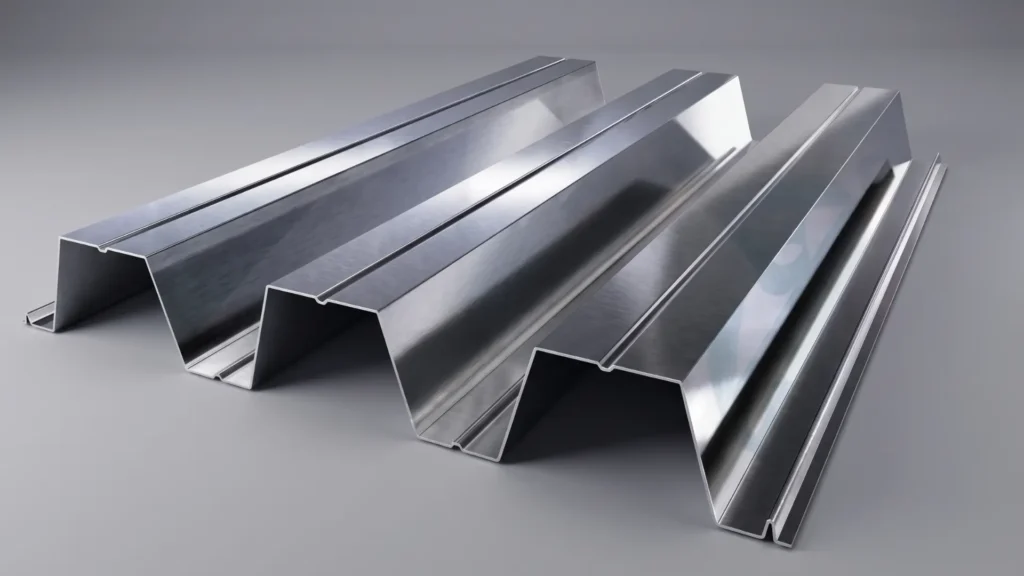
Composite steel floor decking — also called permanent steel shuttering, composite deck slab, or simply deck sheet — is a profiled cold-formed steel sheet used as both the permanent formwork for a concrete slab and, after the concrete has cured, as the tensile reinforcement component of the composite floor system.
The system replaces traditional timber or plywood shuttering in reinforced concrete floor construction. Unlike temporary shuttering, which is struck after the concrete gains strength, the steel deck remains in place permanently as part of the structural floor assembly. This eliminates the cost and programme time of shuttering removal, reduces on-site waste, and — in a correctly designed composite slab — allows the engineer to reduce the slab thickness and reinforcement content compared to an equivalent non-composite concrete slab.
How the Composite Action Works
The trapezoidal or re-entrant profile of the steel deck creates a mechanical interlock with the concrete poured over it. As the cured concrete slab is loaded in bending, the steel deck acts as the bottom tensile reinforcement — resisting the tensile stresses at the bottom of the slab that would otherwise require conventional rebar. The profile’s embossed ribs or indentations on the deck surface increase the bond between steel and concrete, ensuring the two materials act compositely across their interface.
The result: a composite slab that is structurally more efficient than a plain concrete slab of equal thickness, faster to construct than a shuttered and reinforced slab of equivalent capacity, and lighter in self-weight than traditional concrete floor systems — reducing the load on the supporting steel structure or concrete frame.
Where Steel Decking Is Used in Indian Construction
- Multi-storey commercial and office buildings — composite floor slabs on steel frames
- Metro rail and rapid transit viaduct structures — SteelDECK76 and SteelDECK102 for heavy infrastructure loading
- Warehouses and logistics hubs — ground-floor and mezzanine composite slabs
- Industrial plants with multi-level process structures — SteelDECK52 for standard floors
- Data centres and IT campuses — composite floors for raised floor and equipment loading
- Hospitals and institutional buildings — where fast programme and clean formwork-free construction is required
- Parking structures — composite deck for car park slabs
▌ THE GS STEELDECK RANGE — THREE PROFILES, ONE MANUFACTURER
SteelDECK52 vs SteelDECK76 vs SteelDECK102: Which Profile for Which Project?
Geometric Steels manufactures three composite deck profiles — SteelDECK52, SteelDECK76, and SteelDECK102 — differing in rib depth and therefore in spanning capability, slab thickness, and application segment. The correct profile is determined by the structural engineer based on the beam spacing, design loading, and slab thickness requirements of the specific project.
| Specification | SteelDECK52 | SteelDECK76 | SteelDECK102 | Market Standard |
| Rib depth | 52mm | 76mm | 102mm | Typically 51–75mm |
| Cover width | 1030mm | 1030mm | 1030mm | 840mm |
| Sheet thickness | 0.80/1.0/1.2mm | 0.80/1.0/1.2mm | 0.80/1.0/1.2mm | Varies |
| Yield strength | 245 / 350 MPa | 245 / 350 MPa | 245 / 350 MPa | Typically 245 MPa |
| Max unpropped span | 3.0–3.6m | 3.6–4.5m | 4.5–6.0m | Varies by mfr |
| Min slab thickness | 110mm total | 130mm total | 155mm total | Varies |
| 9% lap loss saving | Yes vs 840mm | Yes vs 840mm | Yes vs 840mm | Baseline |
| Primary application | Commercial, industrial, warehouses | Metro, heavy infra, long spans | Heavy industrial, wide-bay infra | General industrial |
| Certification | ISO · CE · IAF | ISO · CE · IAF | ISO · CE · IAF | Varies — check |
All three GS SteelDECK profiles share the 1030mm cover width advantage over the market standard 840mm. The material saving calculation — 9% fewer sheets, fewer deliveries, faster installation — applies equally across SteelDECK52, 76, and 102. The choice between profiles is a structural decision; the cover width saving is a procurement certainty regardless of which you specify.
For structural engineers and project consultants writing specifications for composite floor systems in India, the following standards framework defines the design, material, and testing requirements that any steel decking product must satisfy.
IS 801:1975 — Code of Practice for Use of Cold Formed Light Gauge Steel Structural Members
IS 801 is the primary Indian standard for the design of cold-formed steel structural members — the category under which steel decking falls. The standard governs section properties, effective width calculations, and structural design methodology for profiled cold-formed steel elements. All GS SteelDECK profiles are manufactured from cold-formed steel and are designed per IS 801 principles. When requesting a structural load table from any deck manufacturer, confirm it is derived from IS 801 — not extrapolated from an overseas standard without Indian code verification.
IS 456:2000 — Code of Practice for Plain and Reinforced Concrete
The concrete component of a composite deck slab is designed per IS 456:2000. The minimum concrete grade specified for composite deck slabs in most Indian projects is M25. The slab design — total depth, mesh reinforcement, end anchorage, shear stud spacing — must integrate the deck profile’s section properties with IS 456 requirements. Geometric Steels provides composite slab design data (load-span tables) in IS 456-compatible format for all three SteelDECK profiles.
IS 800:2007 — General Construction in Steel — Code of Practice
IS 800:2007 is the master code for steel structure design in India. For composite floor systems, IS 800 governs the design of the steel beam supporting the deck slab — including the composite action between the beam and slab achieved through shear studs. Projects specifying GS SteelDECK for composite beam-slab systems will find that our technical team can provide shear stud specification guidance coordinated with IS 800 requirements.
IS 875 Part 2:1987 — Imposed Loads on Buildings
The design loading for the composite slab — imposed load plus self-weight — is governed by IS 875 Part 2 for building applications. For infrastructure applications (metro viaducts, bridge decks), the relevant loading code is the IRC or railway-specific standards. GS SteelDECK76 and SteelDECK102 have been specified for infrastructure projects where loading requirements exceed standard building codes — including the Philippines Metro project where international loading standards applied.
EN 1994 (Eurocode 4) — Design of Composite Steel and Concrete Structures
For export projects and international specifications — where CE-marked products are required and where the project’s structural engineer is working to Eurocode standards — Geometric Steels’ CE marking on the SteelDECK range provides the compliance documentation required. The Philippines Metro project specification was reviewed against Eurocode 4 principles. CE certification is the key differentiator that qualifies GS SteelDECK for international infrastructure tenders where Indian IS standards are not the governing code.
ASTM A653 / ASTM A792 — Base Metal Standard for Galvanised / Galvalume Steel
The base metal for GS SteelDECK is sourced from certified primary steel producers (Tata Steel / JSW / SAIL) with material certificates conforming to ASTM A653 for galvanised substrate or ASTM A792 for galvalume (Al-Zinc alloy). Material test certificates are available for every coil batch used in GS SteelDECK production — a requirement for infrastructure project quality assurance documentation.
The Full ROI Calculation: SteelDECK52 on Three Project Sizes
The 9% lap loss saving from SteelDECK52’s 1030mm cover width vs the market standard 840mm translates to different absolute rupee values depending on the project size. Here is the calculation for three common project scales:
Project A — 3,000 sqm Warehouse Mezzanine Floor, Pune
| Factor | Value |
| SteelDECK52 sheets required (1030mm) | 2,913 sheets |
| Market standard sheets required (840mm) | 3,572 sheets |
| Sheets saved | 659 fewer sheets |
| Material cost saving (@ ₹520/sheet) | ₹3.43L |
| Labour saving (fewer sheets to fix) | ₹45,000–₹65,000 |
| Total saving on 3,000 sqm | ₹3.88L–₹4.08L |
Project B — 10,000 sqm Commercial Office Building, Mumbai
| Factor | Value |
| SteelDECK52 sheets required (1030mm) | 9,709 sheets |
| Market standard sheets required (840mm) | 11,905 sheets |
| Sheets saved | 2,196 fewer sheets |
| Material cost saving (@ ₹520/sheet) | ₹11.4L |
| Labour saving — installation | ₹1.5L–₹2.2L |
| Crane and logistics saving (fewer lifts) | ₹60,000–₹90,000 |
| Programme saving | ~2 working days |
| Total saving on 10,000 sqm | ₹13.5L–₹14.5L |
Project C — 50,000 sqm Metro Viaduct / Infrastructure Deck, Pan-India
| Factor | Value |
| SteelDECK76/102 sheets required (1030mm) | ~48,544 sheets |
| Market standard sheets required (840mm) | ~59,524 sheets |
| Sheets saved | ~10,980 fewer sheets |
| Material cost saving (@ ₹580/sheet — 76mm) | ₹63.7L |
| Labour + logistics saving | ₹8L–₹12L |
| Programme saving | ~8–10 working days |
| Total saving on 50,000 sqm | ₹71.7L–₹75.7L |
On a 50,000 sqm metro infrastructure project, the cover width difference between GS SteelDECK and the market standard is worth ₹71–75 lakhs in direct material and labour savings. For a procurement head on a NHAI or metro rail contract, this is not a specification preference — it is a value engineering line item that goes directly to project profitability.
Philippines Metro Project — International Infrastructure
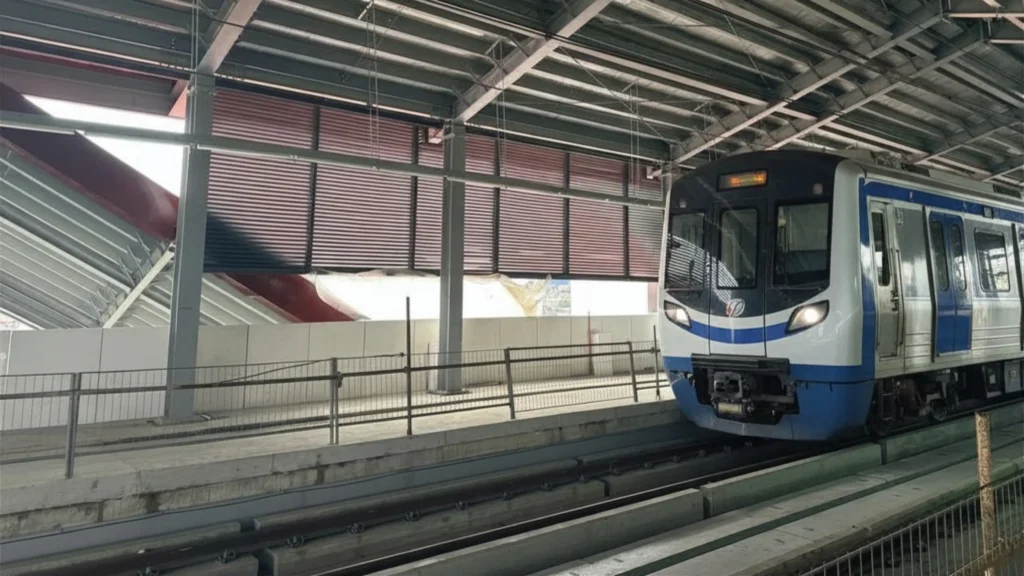
Geometric Steels exports steel decking products to the Philippines, where GS SteelDECK has been specified for metro transit infrastructure.
This international deployment is the single most powerful validation of the product’s specification credentials: an international infrastructure project’s structural engineers reviewed the product against Eurocode 4 and international loading standards, conducted their own compliance assessment, and specified GS SteelDECK — manufactured in Pune — for a project competing with supply from European, Japanese, and Australian deck manufacturers.
CE marking was the gating requirement for this project. It is the certification that separates Indian deck manufacturers who can compete for international infrastructure from those who cannot. Geometric Steels holds CE marking on the SteelDECK range — one of very few Indian composite deck manufacturers to do so.
Samruddhi Mahamarg — India’s Longest Greenfield Expressway
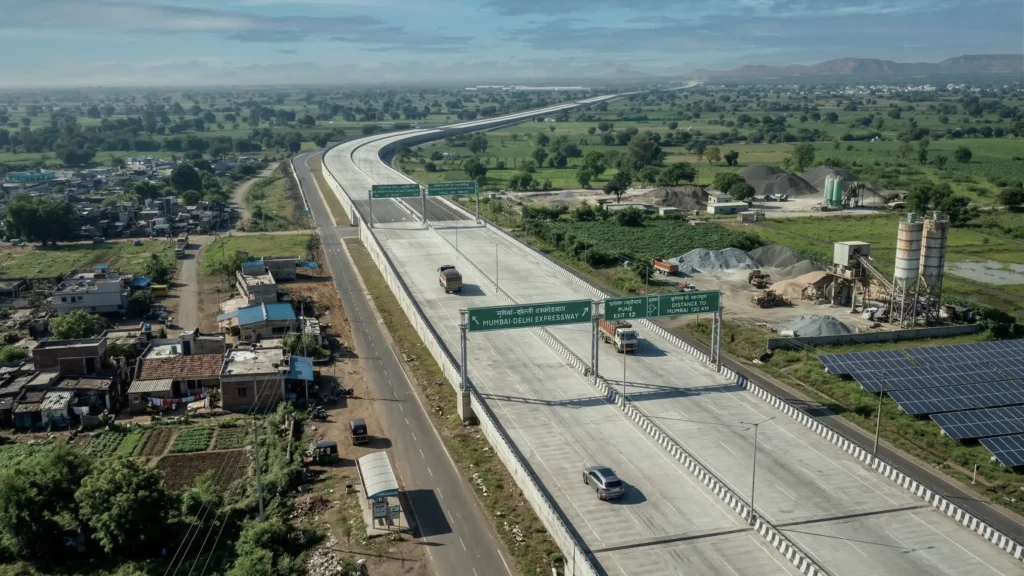
The Nagpur-Mumbai Super Communication Expressway, spanning 701 km, involved Geometric Steels roofing and structural products across its service facility infrastructure along the full corridor.
Samruddhi Mahamarg is the reference project that demonstrates GS’s ability to supply at scale, meet quality standards across a geographically distributed project, and deliver on time against an infrastructure programme managed by MSRDC.
For EPC contractors and PSU procurement teams evaluating GS for their own infrastructure projects, Samruddhi is the reference that opens the conversation.
Z-Morh Tunnel, Ladakh — 11,500 Feet Altitude
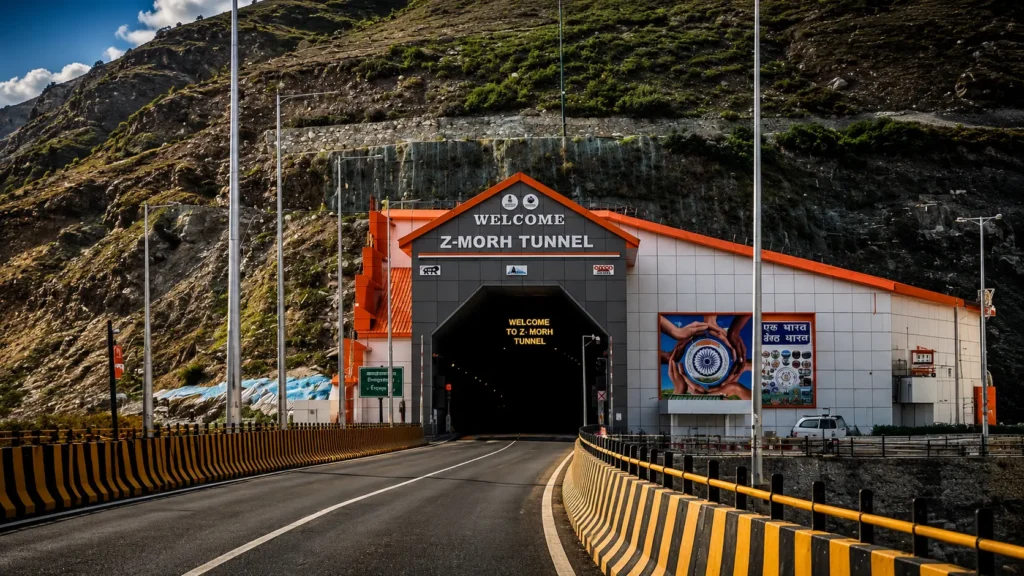
The Z-Morh Tunnel project at 11,500 feet altitude demonstrates that GS structural products are qualified for the most extreme environments in Indian infrastructure — temperatures from -20°C to +35°C, seismic zone IV loading, and the logistical complexity of high-altitude site supply. For defence, BRO, and CPWD projects in challenging geographies, Z-Morh is the reference that establishes GS as a supplier capable of performing where others cannot.
Installation: What Your Site Team and Structural Engineer Need to Know
Composite steel decking installation follows a standard sequence that any experienced steel construction crew can execute — no specialist tools or trades are required beyond standard steel erection capabilities.
- Steel beam erection: primary and secondary beams are erected and plumbed to the structural design grid. Beam top flange alignment is verified — deck installation tolerance is ±5mm on beam centreline spacing.
- Deck placement and lapping: SteelDECK sheets are placed perpendicular to the secondary beams. Sheets are lapped at ends over the beam centreline by minimum 50mm per side (total 100mm end lap). Side laps between adjacent sheets are stitched with self-drilling screws at 300mm centres.
- Shear stud welding: where composite beam action is designed per IS 800, headed shear studs are through-deck welded to the steel beam top flange using a stud gun. Stud diameter, height, and spacing per the structural engineer’s design.
- Edge trim and perimeter: GS supplies matching edge trim and side closure profiles to seal the deck perimeter. Permanent steel edge trim eliminates the need for temporary timber edging formwork.
- Concrete pour: mesh reinforcement is placed per structural design. Concrete is poured to the specified slab depth. SteelDECK’s 1030mm cover width means fewer sheets across the floor, which translates directly to fewer end laps — and each end lap is a potential pour line. Wider cover width means a cleaner, faster concrete operation.
- Post-cure: the composite slab is ready for imposed loading once the concrete reaches 75% of its design cube strength. No shuttering is struck — the deck remains as the permanent soffit finish.
▌ COMPANION PRODUCT — Z PURLIN & C PURLIN
Z Purlin and C Purlin: The Structural System Behind the Deck
In any composite deck floor system, the steel deck sheets span between secondary beams — or, in single-storey industrial structures, between cold-formed steel purlins. For projects where the structural system uses cold-formed purlins rather than hot-rolled secondary beams, Geometric Steels’ Z Purlin and C Purlin are the natural companion product to the SteelDECK range.
The 80mm web height purlin — available only from Geometric Steels in India — is the relevant specification for light industrial mezzanine floors and canopy structures where SteelDECK52 spans between purlins at 2.5–3.0m bay spacing. The structural engineer’s beam selection for these applications has historically been forced to over-specify to 100mm due to the absence of an 80mm product in the Indian market. GS eliminates that compromise.
| Application | Deck Profile | Purlin / Beam |
| Light industrial mezzanine — 2.5–3m bay | SteelDECK52 | GS Z Purlin 80–100mm, 240 MPa |
| Standard warehouse mezzanine — 3–3.6m bay | SteelDECK52 | GS Z Purlin 150mm, 350 MPa |
| Commercial floor — 3.6–4.5m bay | SteelDECK76 | Hot-rolled secondary beam (IS 800) |
| Infrastructure deck — 4.5–6m+ bay | SteelDECK102 | Hot-rolled or plate girder |
GS SteelDECK Technical Specifications: BOQ Reference Data
| Parameter | GS SteelDECK52 / 76 / 102 | Market Standard Profile |
| Cover width | 1030mm — all three profiles | 840mm typical |
| Rib depth | 52mm / 76mm / 102mm | 51mm / 75mm (typical) |
| Base metal thickness | 0.80mm / 1.0mm / 1.2mm | 0.80mm / 1.0mm typical |
| Steel grade | 245 MPa or 350 MPa | 245 MPa typical |
| Coating | Hot-dip galvanised Z275 | Varies |
| Embossments | Rolled-in shear bond keys | Varies by manufacturer |
| End anchorage | Rib burring at sheet ends | Varies |
| Delivery length | Mill-cut to order — any length up to 12m | Standard lengths only (typically) |
| Load-span tables | IS 801 + IS 456 compatible | Varies — confirm standard |
| CE Marking | Yes — EN composite deck | Rarely — check carefully |
| ISO 9001:2015 (IAF MLA) | Yes — Kurkumbh MIDC, Pune | Varies |
| Material test cert. | Available per coil batch | Varies |
| International projects | Philippines Metro — CE qualified | Typically domestic only |
Frequently Asked Questions
Q1: What is the difference between SteelDECK52 and SteelDECK76?
The primary difference is rib depth — 52mm vs 76mm — which determines the maximum unpropped span, the minimum slab depth, and the structural application. SteelDECK52 is the standard specification for commercial floor slabs with beam spacings of 3.0–3.6m. SteelDECK76 is specified where longer spans (3.6–4.5m) are required, where greater slab stiffness is needed, or where the project loading requires the deeper composite slab profile — typically infrastructure, metro, and heavy industrial applications. Both profiles share the same 1030mm cover width, so the 9% material saving applies to both.
Q2: How does a 1030mm cover width deck save 9% material vs an 840mm deck?
The material saving comes from reduced lap loss — the deck area consumed by sheet overlaps that does not contribute to floor coverage. A narrower sheet has proportionally more lap per unit of floor covered than a wider sheet. With 840mm cover, laps represent approximately 12.5% of the gross sheet width on a standard installation. With 1030mm cover, the same lap dimension represents approximately 9.7% of gross width. The net effective cover per sheet increases by 9% — meaning 9% fewer sheets are needed for the same floor area. On a 10,000 sqm floor, this equates to approximately 2,196 fewer sheets — saving ₹11.4 lakhs at typical sheet pricing.
Q3: Is GS SteelDECK suitable for metro and railway infrastructure projects?
Yes. GS SteelDECK76 and SteelDECK102 have been specified for infrastructure deck applications including the Philippines Metro transit project. The key qualification for metro and railway projects is CE marking — which GS holds — and the ability to provide load-span tables validated to the project’s structural code (IS 800, Eurocode 4, or project-specific standards). For DMRC, MMRC, Pune Metro, or NHAI infrastructure projects, our technical team can provide the full documentation package required for approved vendor registration.
Q4: What material test certificates are available for GS SteelDECK?
Geometric Steels provides material test certificates (MTC) for every coil batch used in SteelDECK production, sourced from the primary steel manufacturer (Tata Steel, JSW, or SAIL). MTCs confirm base metal yield strength, coating weight (Z275 galvanised), and elongation values. For infrastructure projects requiring independent third-party testing, GS can arrange testing at NABL-accredited laboratories. The ISO 9001:2015 (IAF MLA) quality management system at Kurkumbh MIDC mandates material traceability from coil to finished sheet.
Q5: Can GS supply SteelDECK in custom lengths for a project?
Yes. All three GS SteelDECK profiles are mill-cut to the length specified at order — any length up to 12m as standard, with longer sheets available on request. Custom lengths eliminate on-site cutting waste and ensure each sheet is manufactured to the designed span length. This is particularly valuable on infrastructure projects where consistent sheet length directly affects the concrete pour sequence and programme. Standard market profiles are typically supplied in fixed lengths and require on-site cutting — adding waste, labour cost, and programme risk.
Q6: What are the minimum order quantities for GS SteelDECK?
Geometric Steels supplies SteelDECK for projects from 500 sqm upwards. For large infrastructure projects (10,000 sqm+), we offer programme-aligned batch deliveries — supplying in sequence with the site’s floor-by-floor construction programme to minimise site storage requirements. Contact our team with your project’s floor area, deck profile requirement, and programme timeline for a quotation and delivery schedule.
Value Engineering Starts at the Cover Width. Let Us Show You the Numbers.
Give us your project’s floor area, bay spacing, and design loading. We will return a complete BOQ comparison — SteelDECK52 vs market standard — showing you the exact sheet count difference, the rupee saving, and the IS 801 / IS 456 compliant load-span tables for your structural engineer to verify. CE certification, material test certificates, and ISO 9001:2015 documentation included as standard.
For More visit here: https://geometricsteels.com/steel-decking-mezzanine-systems/
Request Estimate Boq:
Complete GS SteelDECK supply package includes:
- SteelDECK52 / SteelDECK76 / SteelDECK102 — 1030mm cover width, custom mill-cut lengths up to 12m
- 0.80mm / 1.0mm / 1.2mm base metal thickness at 245 or 350 MPa yield strength
- IS 801 + IS 456 compatible load-span tables for structural engineer verification
- CE marking and ISO 9001:2015 (IAF MLA) certification documentation
- Material test certificates per coil batch from primary steel manufacturer
- Matching edge trim, side closure, and perimeter detail profiles
- Z Purlin and C Purlin (80–300mm web) as companion structural system where applicable
- BOQ comparison: GS SteelDECK vs market standard — material saving calculation for your project
- Programme-aligned batch delivery for large-scale infrastructure and multi-floor commercial projects
Contact Geometric Steels Roll Forming Pvt. Ltd.
Phone: +91 8550995556 | geometricsteels.com
Manufacturing: Kurkumbh MIDC, Pune, Maharashtra
Supplying metro, infrastructure, and commercial projects across India and 7 countries
ISO 9001:2015 (IAF MLA) | CE Marked | Established 2006
India Builds Under Our Roof. | 20 Years · 64 Products · 7 Countries · ISO · CE · IAF Certified